There are phases in life when everything appears normal on the surface, and yet an unexplainable heaviness begins to rise within. Old memories surface without invitation. Reactions feel disproportionate. Certain fears, resentments, or grief seem to return again and again, even when life externally appears stable. It is often during such phases that the deeper layers of the psyche begin to reveal themselves.
In psychological language, Carl Jung referred to this as the shadow — the part of the self that remains hidden, denied, or unacknowledged. The shadow is not always negative. It contains suppressed emotions, unresolved grief, anger, jealousy, shame, and even unexpressed talents or desires. Over time, what is not consciously processed settles into the subconscious and begins to shape behaviour, relationships, and life choices.
The shadow does not disappear by ignoring it. It waits. It surfaces in moments of vulnerability or transition. It appears in the people one is triggered by, in repeated life patterns, and in emotional responses that feel larger than the present moment. When left unexamined, it quietly governs reactions. When brought into awareness, it becomes a doorway to profound healing.
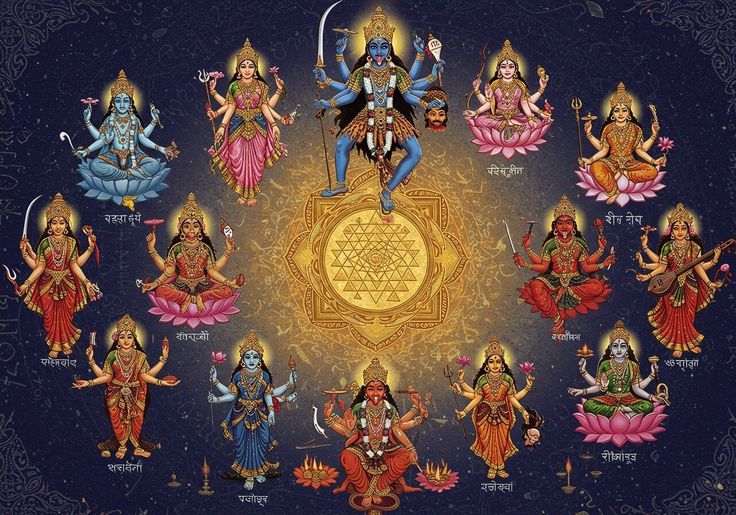
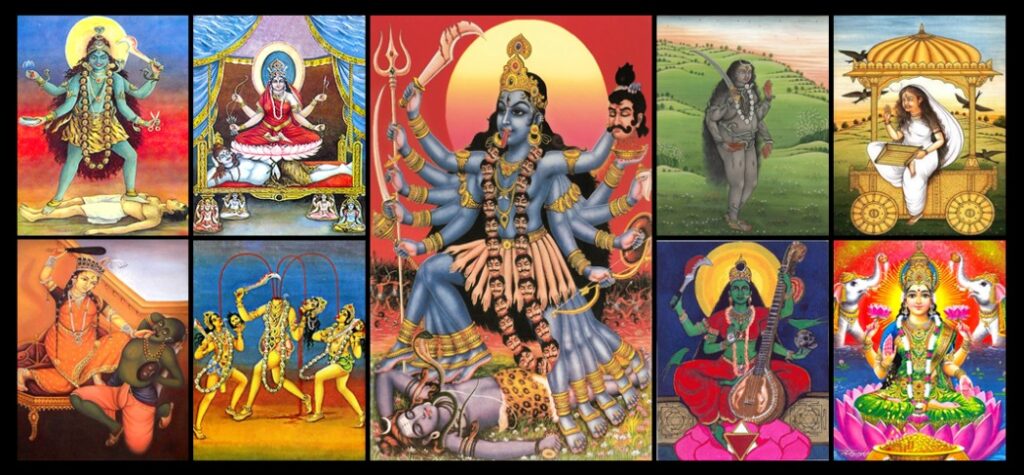
Within the tantric and Mahavidya traditions, certain deities are associated with this deeper inner work. Dhumavati and Chinnamasta are among them. These are not deities of comfort or celebration. They are not typically invoked during phases of ease. Their presence is felt when life demands honesty, confrontation, and release.
Quick Read – Do You Need a Guru or Can You Learn Without One? What Guidance Actually Looks Like in Mahavidya Work
Dhumavati: The Wisdom of Emptiness and Unresolved Grief
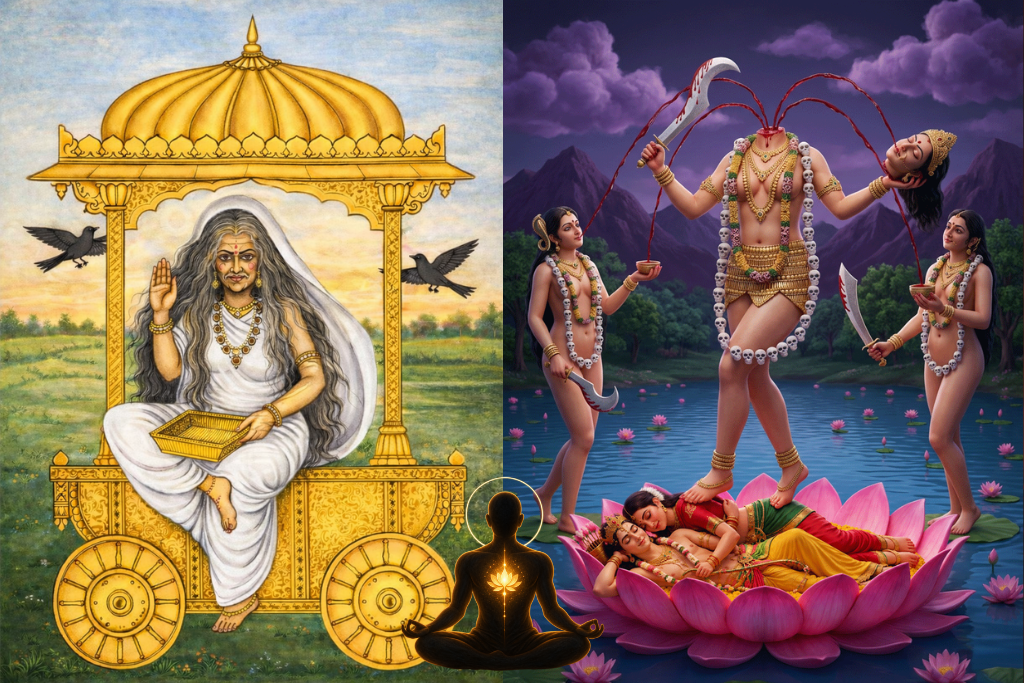
Dhumavati is often described as the goddess of the void — the space where illusions collapse and hidden emotions rise. She represents states of life where loss, loneliness, or stagnation are experienced. These may manifest as emotional emptiness, unresolved grief, or a sense of being disconnected from meaning. Her energy is not pleasant in the conventional sense, but it is deeply clarifying.
When Dhumavati’s influence appears, it often brings forward what has been suppressed for years or even generations. Family patterns of silence, unspoken sorrow, or emotional neglect may begin to surface. In this way, she acts as a strict yet compassionate teacher, revealing what must be acknowledged before healing can occur. She does not create emptiness; she reveals what has always been present beneath distraction.
Suggested Read – Das Mahavidya: The Lessons for Daily Modern Life
Chinnamasta: Confronting Ego and Emotional Suppression
Chinnamasta represents another dimension of shadow work — the confrontation of ego and suppressed emotional intensity. Her symbolism is striking: the willingness to cut through illusion and face truth directly. When her energy becomes active in a seeker’s life, situations often arise that challenge control, identity, or self-perception. Carefully maintained facades may dissolve, and deeply buried emotions may surface unexpectedly.
Such phases can feel destabilising, yet they hold immense potential for transformation. Chinnamasta’s presence encourages the release of old identities and the integration of hidden aspects of the self. She reveals how much energy is spent maintaining emotional suppression and invites the seeker to redirect that energy toward awareness and authenticity.
Neither Dhumavati nor Chinnamasta enters life gently. They arrive as strict teachers when the soul is ready to confront what has been avoided — not only personally but often generationally. Patterns carried within family lineages, unresolved ancestral grief, or inherited fears may begin to surface. What has remained hidden across generations seeks acknowledgment and release.
Understanding the Shadow Through Collective Practice
Working with shadow is rarely easy in isolation. When attempted alone, it can feel overwhelming or confusing. One may struggle to distinguish between genuine insight and emotional turbulence. This is why collective spiritual practice and guided environments become invaluable.
When shadow work is undertaken within a structured group, supported by a teacher and shared intention, the process becomes more integrated. Seeing others engage with their own inner patterns creates reassurance and perspective. Shared experiences normalise the intensity of inner work. Conversations and reflections within the group provide clarity and grounding.
Collective chanting and guided practices also create a stabilising energetic field. When beej mantras or meditative processes are undertaken together, the vibration becomes stronger and more contained. The presence of others acts as both support and mirror. One person’s courage to confront an inner pattern often inspires another to do the same. The journey becomes less isolating and more anchored in shared growth.
In such settings, the shadow is not confronted as an individual burden but as part of a collective evolution. Participants realise that everyone carries hidden layers — personal and ancestral — and that healing becomes easier when witnessed and supported.
Powerfully Charged Days as Natural Containers
Traditionally, deep shadow work and invocation of intense feminine energies were aligned with specific lunar days and cosmic timings. Amavasya (new moon), eclipses, and certain nakshatras have long been regarded as naturally charged periods when release and transformation are more accessible. These days create energetic conditions that support letting go of old patterns and integrating new awareness.
A responsible teacher or guide often chooses such timings deliberately. Conducting practices on energetically supportive days provides a natural container for emotional release and inner clarity. The cosmic environment itself assists the process, making it easier for participants to access and release deeper layers without feeling destabilised.
Meeting the Shadow to Meet Life Purpose
Engaging with shadow is not an abstract or purely spiritual exercise. It is directly linked to life purpose and emotional freedom. Unacknowledged shadow often manifests as projection — seeing in others what remains unintegrated within oneself. Patterns of judgment, resentment, or repeated conflict frequently originate from unresolved inner material.
When shadow is acknowledged and integrated, these projections soften. One begins to understand rather than react. Compassion deepens, both for oneself and for others. Emotional energy previously tied up in suppression becomes available for creativity, clarity, and purposeful action.
Dhumavati and Chinnamasta do not arrive to punish or destabilise. They arrive to reveal and release. Their teachings are rarely comfortable, yet they are profoundly liberating. By guiding seekers through the darker corridors of the psyche, they open the way toward authenticity and alignment.
Working with these energies within a conscious, guided, and collective container ensures that the process remains grounded and supportive. The shadow, once faced with awareness and courage, becomes not an obstacle but a source of wisdom. And through this integration, the path toward one’s true purpose becomes clearer, steadier, and deeply empowered.

Dr. Manmeet Kumar is a Spiritual Coach who founded Soul Miracles in 2016. She uses her gifts of being a psychic and a medium to enable others to transform their inner core.