Over the years, I have spoken about many spiritual subjects, but one conversation in particular created a ripple I did not fully expect. When I recorded my podcast on Kamakhya Temple, something interesting happened afterwards. I began meeting people—dozens of them, eventually hundreds—who told me that after watching that episode, they felt an inexplicable pull to visit Kamakhya themselves.
Some went out of curiosity.
Some went with devotion.
And some went simply because something inside them felt called.
Many of them came back with stories—strange coincidences, emotional breakthroughs, unexpected clarity about their lives. A few said they did not even know why they had cried when they stood inside the temple.
It made me pause and ask a deeper question.
What is it about Shakti Peethas that affects people so deeply?
Is it only faith?
Is it mythology?
Or is there something more subtle at work?
Before we answer that, let me leave the link to that Kamakhya podcast here, in case you would like to watch it later and understand the experience many people are referring to.
But today I want to look at Shakti Peethas from a slightly different lens—the lens of Tantra.
The Pitfalls of Self-Initiation: Why Advanced Tantra Still Needs Guidance
Tantra and the Living Presence of Devi
The moment we say the word Tantra, many people either feel curiosity or discomfort. That is because Tantra has often been misunderstood or reduced to rituals that look mysterious from the outside.
But Tantra, in its original essence, is actually very simple.
Tantra is the understanding that the universe is alive with energy, and that the human being is not separate from that energy.
In tantric philosophy, Shiva represents consciousness, the silent witnessing principle, while Shakti represents energy, the force that moves, creates, destroys, and transforms.
Without Shakti, Shiva remains still.
Without Shiva, Shakti has no direction.
Every human being carries both.
The consciousness within us is Shiva.
The energy that animates our body, emotions, and thoughts is Shakti.
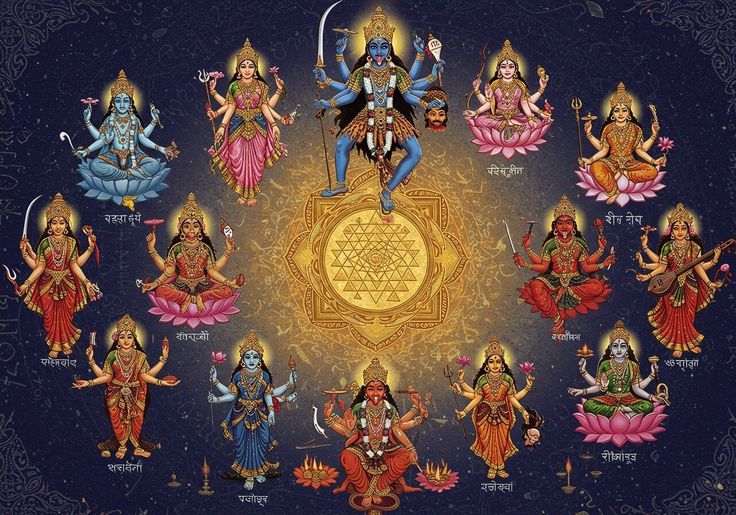
This is why Devi occupies such an important place in Tantra. She is not merely a goddess in a temple. She is the living energy of existence itself.
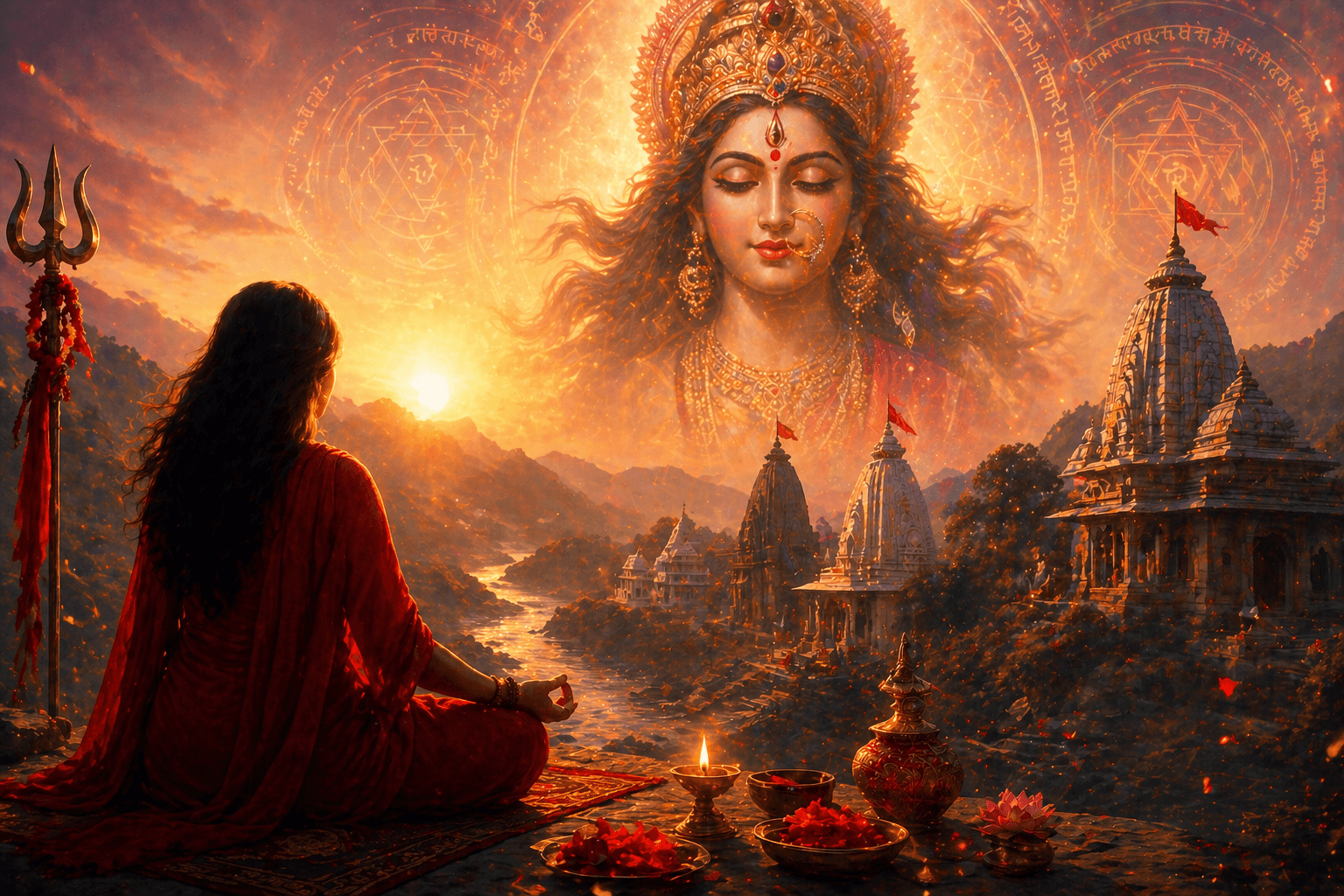
When a tantric practitioner worships Devi, they are not only bowing to an external form. They are also awakening the Shakti within their own system.
And this is exactly where Shakti Peethas become important.
Wrathful Forms, Safe Containers: Ethics, Cleansing, Supervision and Aftercare in Shakti Practice
Why Shakti Peethas Exist
According to ancient texts like the Devi Bhagavata Purana and the Kalika Purana, the Shakti Peethas were formed when the body of Sati, the consort of Shiva, fell across different parts of the subcontinent.
Each place where a part of her body fell became a seat of Shakti, a place where the energy of the goddess remains intensely present.
Most people know this story as mythology. But Tantra sees it differently.
Tantric traditions believe that these sites are energetic gateways, places where the spiritual force of the Devi is unusually concentrated.
Think of them as spiritual power stations.
Just as certain locations on Earth carry magnetic fields stronger than others, certain sacred sites hold a deeper energetic vibration that interacts with the human mind and body.
When a person enters such a space with openness, something inside them responds.
That response is what many pilgrims feel.
Kamakhya: The Awakening of Creative Shakti
Among the many Shakti Peethas, Kamakhya Temple in Assam holds a very special place in Tantra.
Unlike most temples, there is no idol of the goddess here. Instead, the sanctum contains a natural rock formation representing the yoni of the Devi, symbolizing the source of creation.
The temple is also associated with the Kamakhya Tantra tradition, one of the oldest tantric streams in India.
But what many visitors do not realise is that Kamakhya is not only about fertility or wishes.
It is about creative power.
When people visit Kamakhya, many of them experience an emotional or energetic shift because the temple carries a strong current of creative Shakti—the same energy that creates life, ideas, and transformation.
For seekers who come with awareness, Kamakhya can activate something deeper within them.
Sometimes that activation shows up as clarity.
Sometimes as emotional release.
Sometimes as a sudden urge to change direction in life.
In tantric language, we say that Kamakhya awakens the creative Devi within the seeker.
Kalighat: When Devi Removes Illusion
Another Shakti Peetha that carries a very different energy is Kalighat in Kolkata, dedicated to Maa Kali.
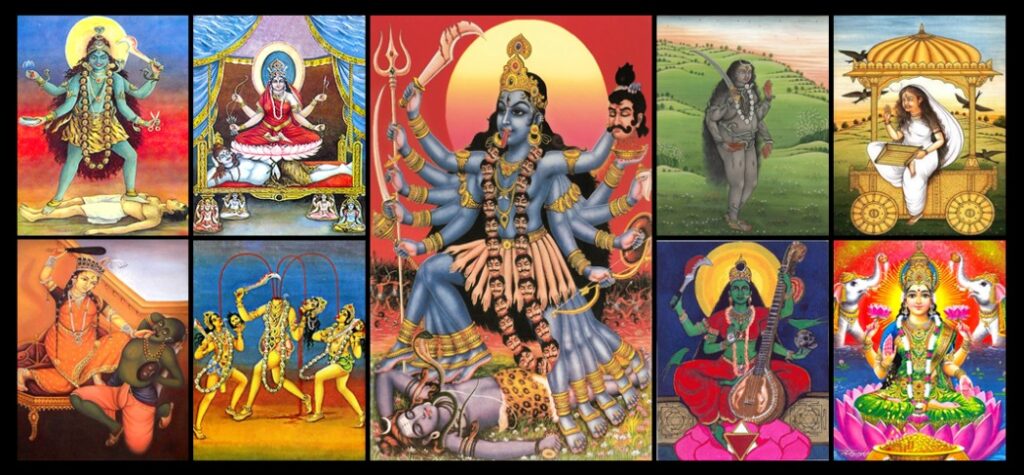
Kali is not the gentle mother most people imagine when they think of Devi. She is fierce, raw, and uncompromising.
But her fierceness has a purpose.
Kali destroys illusion.
When devotees stand before Kali, they are confronted with a form that reminds them that life is temporary, that ego is fragile, and that truth eventually strips away every mask we wear.
Tantric practitioners historically meditated near cremation grounds associated with Kali temples because such places force the mind to face reality directly.
Kalighat represents that stage in the spiritual journey where the seeker stops asking the universe to remove problems and instead develops the courage to face life exactly as it is.
Jwalamukhi: The Inner Flame of Consciousness
In Jwalamukhi Temple in Himachal Pradesh, the goddess appears in a completely different form.
Here there is no statue of the Devi.
Instead, flames emerge naturally from the rock and have been burning for centuries.
These flames are worshipped as the presence of the goddess herself.
In Tantra, fire represents inner transformation.
Just as fire burns away impurities, spiritual awareness burns away confusion, fear, and ignorance.
When a seeker sits quietly before the eternal flame at Jwalamukhi, it becomes a powerful meditation.
The outer flame becomes a reminder of the inner flame of consciousness that must remain steady even when life changes around us.
The Hidden Purpose of Shakti Peethas
Most people visit Shakti Peethas to pray for solutions to problems—health, relationships, career, children.
There is nothing wrong with that. Devotion begins wherever the heart needs it.
But Tantra suggests a deeper purpose.
These sacred places are meant to awaken the Tantrik within us.
Not the stereotype of a Tantric, but the inner seeker who remains connected to Shiva, the part of us that does not collapse under life’s challenges.
Tantra teaches that every difficulty contains the potential for transformation.
When we connect with the energy of Devi at a Shakti Peetha, that inner resilience begins to awaken.
How to Gain the Maximum From Visiting a Shakti Peetha
If you ever visit a Shakti Peetha, there are a few simple ways to deepen the experience.
First, do not rush in and out of the temple. Spend some time simply sitting in silence. Sacred spaces reveal themselves slowly.
Second, enter with a clear intention. Instead of asking for ten different things, ask for clarity or strength to walk your path.
Third, chant a simple Devi mantra quietly in your mind. Even a short mantra can help align your mind with the energy of the place.
Fourth, observe your emotions. Sometimes the Devi works through subtle shifts inside us rather than dramatic miracles outside.
And finally, remember that the purpose of visiting such places is not just to receive blessings but to awaken the Shakti already present within you.
Because the greatest secret of Tantra is this:
The Devi you seek in temples across the land
is the same energy that already lives within your own consciousness.
The pilgrimage to a Shakti Peetha is therefore not only a journey across geography.
It is ultimately a journey back to the power within yourself.

Dr. Manmeet Kumar is a Spiritual Coach who founded Soul Miracles in 2016. She uses her gifts of being a psychic and a medium to enable others to transform their inner core.