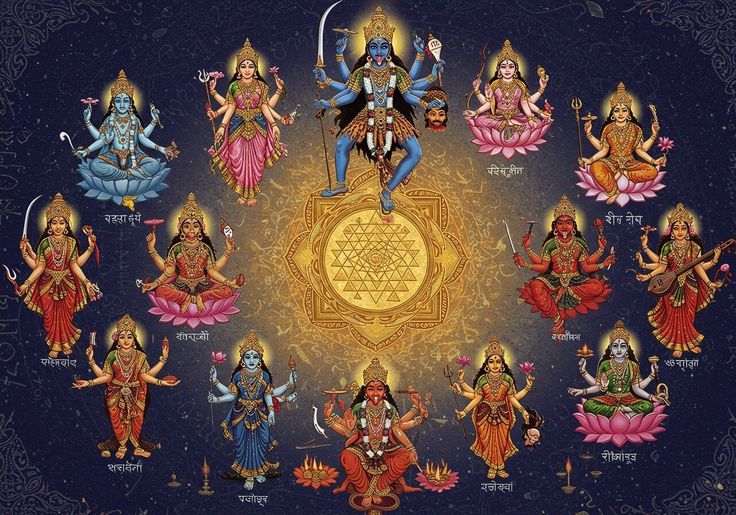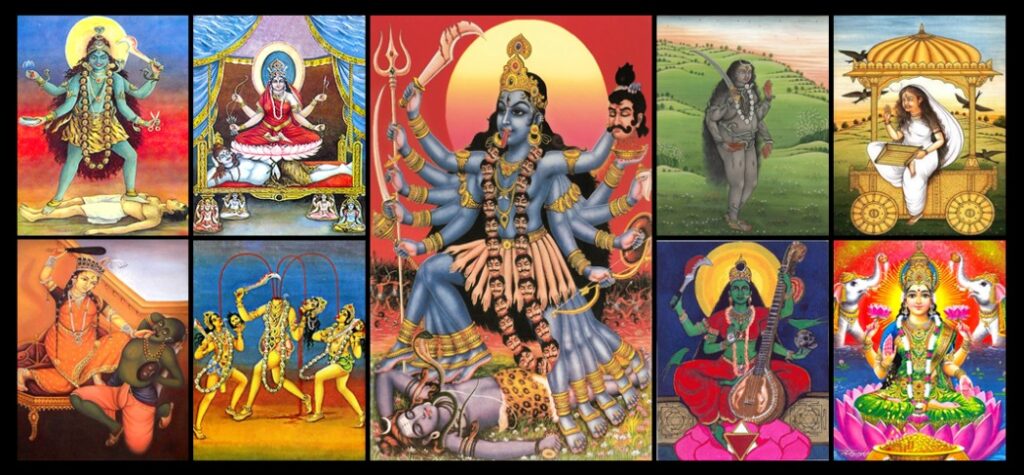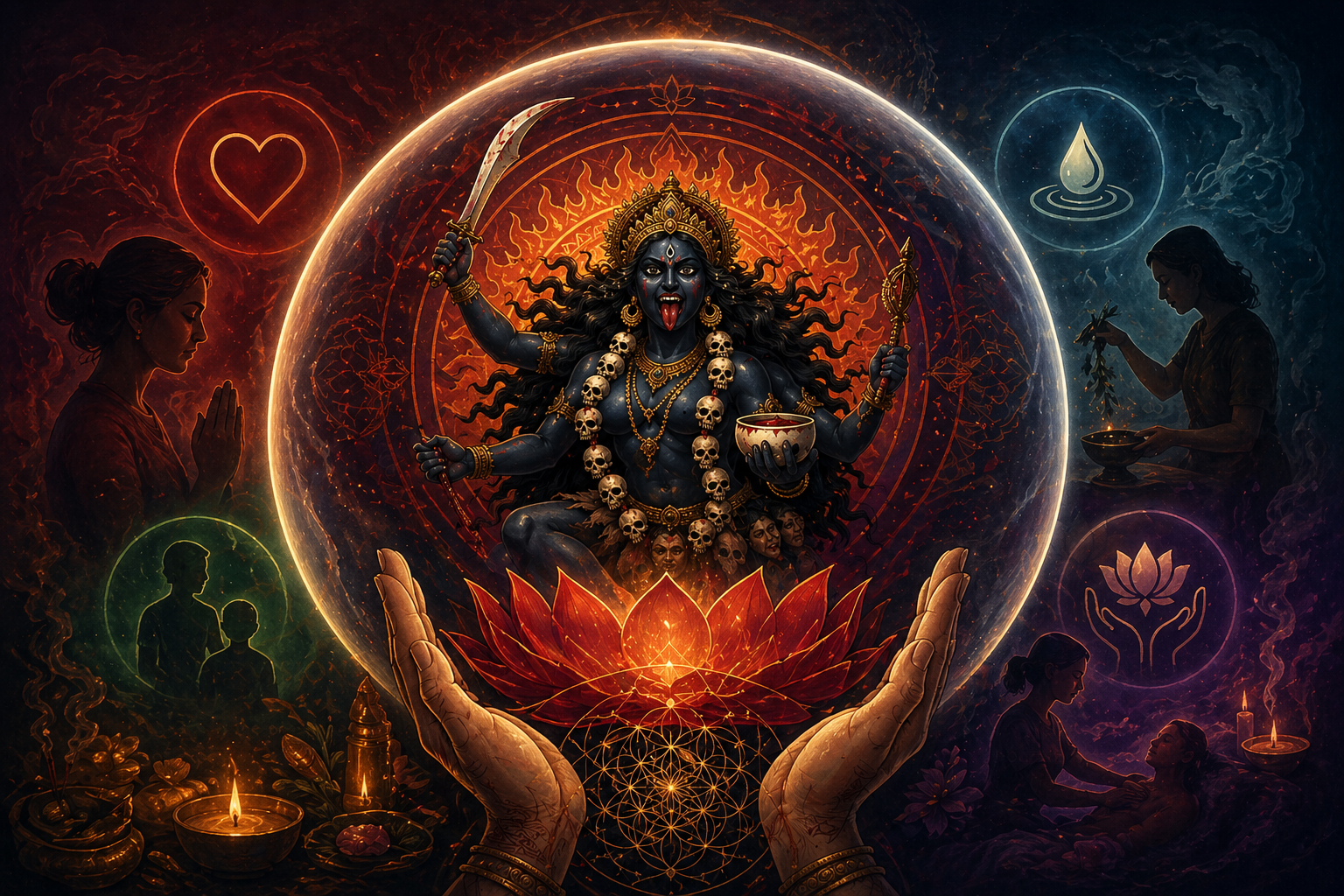
In the deeper path of Shakti, not all forms of the Divine Feminine arrive softly. Some come as fierce protectors, dissolvers of illusion, and accelerators of karmic change. Kali, Bhairavi, Chinnamasta, Dhumavati and Bagalamukhi are often described as wrathful forms — not because they bring harm, but because they work at a level of intensity that demands awareness and responsibility from the seeker.
In earlier traditions, such forms were never invoked casually. They were approached within what can only be described as safe spiritual containers — guided environments where ethics, grounding, and aftercare were understood as essential parts of the practice. Fierce energies were always balanced with care and integration. This is an understanding that becomes especially important in modern spiritual work.
Wrathful forms transform. They do not simply bless from a distance; they activate. They bring buried emotions to the surface, sharpen perception, and accelerate inner shifts. When approached respectfully, they create clarity and protection. When approached without preparation, they can feel overwhelming or destabilising. The purpose of creating a safe container is not to limit spiritual experience but to ensure that transformation remains integrated and supportive rather than chaotic.
Quick Read – Do You Need a Guru or Can You Learn Without One? What Guidance Actually Looks Like in Mahavidya Work
Ethics: The Foundation of Fierce Practice
Any work with intense forms of the Divine must begin with clear intention. These energies are not invoked for display, control, or emotional reaction. They respond to sincerity, humility, and responsibility. Ethical practice means approaching the Devi with reverence, maintaining emotional balance, and respecting the inner process that unfolds.
Within group settings, ethics also extend to the way space is held for others. Participants must feel safe, not pressured. Experiences should never be compared or judged. Spiritual work becomes meaningful only when conducted within a respectful and grounded environment.
Cleansing and Grounding: Maintaining Balance
Whenever powerful feminine energies are invoked, grounding becomes essential. The body and mind often respond to such practices with heightened sensitivity or inner movement. Simple acts of grounding help stabilise this energy. For example, when invoking Kali or other intense forms, it is often advised to remain physically hydrated. Water helps regulate internal heat and maintains balance within the system. Many practitioners notice that fierce mantras or meditative states can increase internal warmth or restlessness, and something as simple as mindful hydration supports integration.
Similarly, after deep chanting or ritual work, one should avoid abruptly returning to daily distractions. A few moments of stillness, quiet breathing, or gentle grounding can help settle the nervous system. Lighting a diya, sitting in silence, or stepping briefly into open air allows the invoked energy to integrate naturally rather than remain heightened.
Care in Gesture and Ritual Practice
When working with sacred gestures, hand positions, or ritual movements, attentiveness is important. Even small physical details — how the body is seated, where hands are placed, how long a gesture is held — contribute to energetic alignment. Traditionally, such aspects were always taught under supervision so that the practitioner remained balanced. The intention is not to create fear but to cultivate awareness. Spiritual gestures are powerful precisely because they engage both body and consciousness, and therefore they require mindful execution.
Quick Read – Das Mahavidya – A First-Timer’s Glossary
Supervision and Guided Practice
Historically, intense spiritual practices were rarely undertaken entirely alone. They unfolded within guided environments where a teacher or senior practitioner ensured that participants remained emotionally and energetically balanced. This structure existed not to control but to support. Within collective practice, experiences can be shared, clarified, and integrated. One person’s insight may help another remain grounded. Questions can be addressed before they become confusion.
In contemporary contexts, supervision may take the form of structured circles, guided sessions, or ongoing mentorship. Being part of such a container ensures continuity and reduces the likelihood of feeling isolated in one’s experiences. It also fosters discipline — a crucial aspect when working with powerful energies.
Aftercare: Integrating the Experience
Aftercare is perhaps the most overlooked aspect of spiritual practice. Intense chanting or invocation often stirs emotional or energetic movement that continues even after the formal practice ends. Gentle aftercare helps integrate this movement into daily life.
This may include simple, mindful actions: resting quietly, maintaining personal grooming rituals that ground the body, or revisiting one’s original intention or sankalpa with clarity. Even small acts such as combing or caring for one’s hair, eating something grounding, or journaling briefly can help bring the energy back into a centred state. These are not elaborate rituals but gestures of self-care that signal closure and integration.
The purpose of aftercare is not to diminish the intensity of the experience but to anchor it. Without integration, even powerful spiritual moments can feel scattered or incomplete. With integration, they become sources of strength and clarity.
Suggested Read – How to Choose a Das Mahavidya Teacher: Lineage, Ethics, Consent, and Red Flags
Safe Containers in Modern Spiritual Work
Creating safe containers today means combining ancient wisdom with practical sensitivity. Clear communication, ethical guidance, grounding practices, and thoughtful aftercare ensure that participants feel supported throughout the process. Whether practicing individually or within a group, maintaining this balance allows the fierce forms of the Divine to be experienced as protective and transformative rather than overwhelming.
Wrathful forms of the Divine Feminine are not to be feared, but they are to be respected. They carry immense power to clear, protect, and awaken. When approached within safe and conscious containers, their presence becomes deeply stabilising. They reveal truth without destabilising the seeker and strengthen the inner world rather than disrupting it.
In such spaces, intensity becomes clarity, discipline becomes strength, and devotion becomes grounded transformation.

Dr. Manmeet Kumar is a Spiritual Coach who founded Soul Miracles in 2016. She uses her gifts of being a psychic and a medium to enable others to transform their inner core.