
When most people hear the word Tantra, a few images immediately come to mind.
Something secretive.
Something sexual.
Something dark.
Something taboo.
Some even think Tantra means strange rituals, blood, skulls, or people who live outside society.
But pause for a moment and ask yourself this:
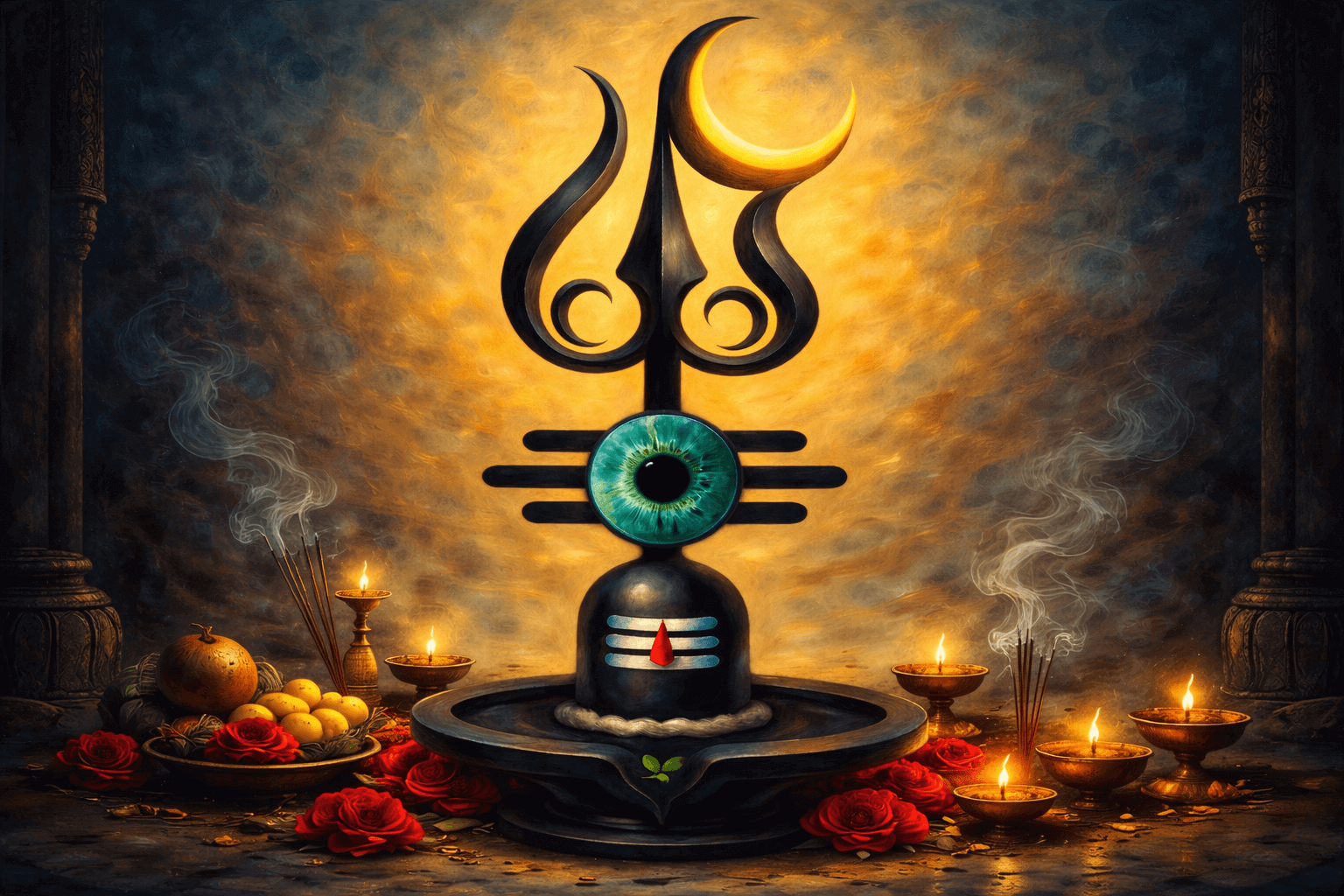
If Tantra was so wrong, so impure, so dangerous — why would Shiva be its source?
Ancient Tantric texts do not describe Tantra as scandalous.
They describe Tantra as a method.
The word Tantra literally means a process, a system, a framework —
a way through which something moves from point A to point B.
Not slowly.
Not blindly.
But effectively.
In the Rudra–Yamala Tantric understanding, bondage is not caused by desire, anger, or fear. Bondage is caused by unconscious reaction. Tantra is the process through which awareness replaces reaction.
This is also the foundation of the ten great wisdom energies of Tantra. Each Mahavidya represents a different doorway through which consciousness evolves, not by rejection of life, but by direct engagement with reality as it is.
That’s it.
Tantra is not about what you do. Tantra is about how you do it.
This is why Shiva is called the head of Tantra.
Shiva represents pure awareness — untouched, observant, present.
He does not reject life.
He does not decorate it.
He sees it fully.
Tantra teaches the same thing.
It does not ask you to leave society.
It does not ask you to become a Tantric.
It does not ask you to perform rituals.
It teaches you a different way of meeting reality.
For example:
- When anger arises, Tantra doesn’t say suppress it or express it.
It says: see it clearly. - When desire arises, Tantra doesn’t say indulge or deny it.
It says: understand it.
That understanding changes the outcome faster than struggle ever could.
This is why Tantra was misunderstood over time.
Because it does not control behavior —
it changes perception.
And perception is power.
Tantra is not strange.
It is precise.
It is a faster, more effective way of working with the mind, emotions, and life itself — without separating you from society or turning you into something you’re not.
Knowing Tantra does not make you a Tantric.
It makes you more conscious in everyday life.
The great Tantric seat of Kamakhya is rooted in this very understanding — Tantra not as taboo, but as direct experiential wisdom. The upcoming Kamakhya workshop, also based on Tantra, explores this path in a grounded and accessible way, without myths or fear.
So the real question is not:
“Is Tantra dangerous?”
The real question is:
If Shiva embodies awareness itself, would he ever stand for something false?
If this made you pause or think differently — or if you are curious about Tantra, the Das Mahavidyas, or the Kamakhya path — leave a comment or let me know.
I’ll be happy to talk about it.

Dr. Manmeet Kumar is a Spiritual Coach who founded Soul Miracles in 2016. She uses her gifts of being a psychic and a medium to enable others to transform their inner core.